| |

The $50 Movie Ticket Wasn’t Just About the Movie

Kai Ryssdal, host of Marketplace — one of my favorite programs — got stopped by a number.

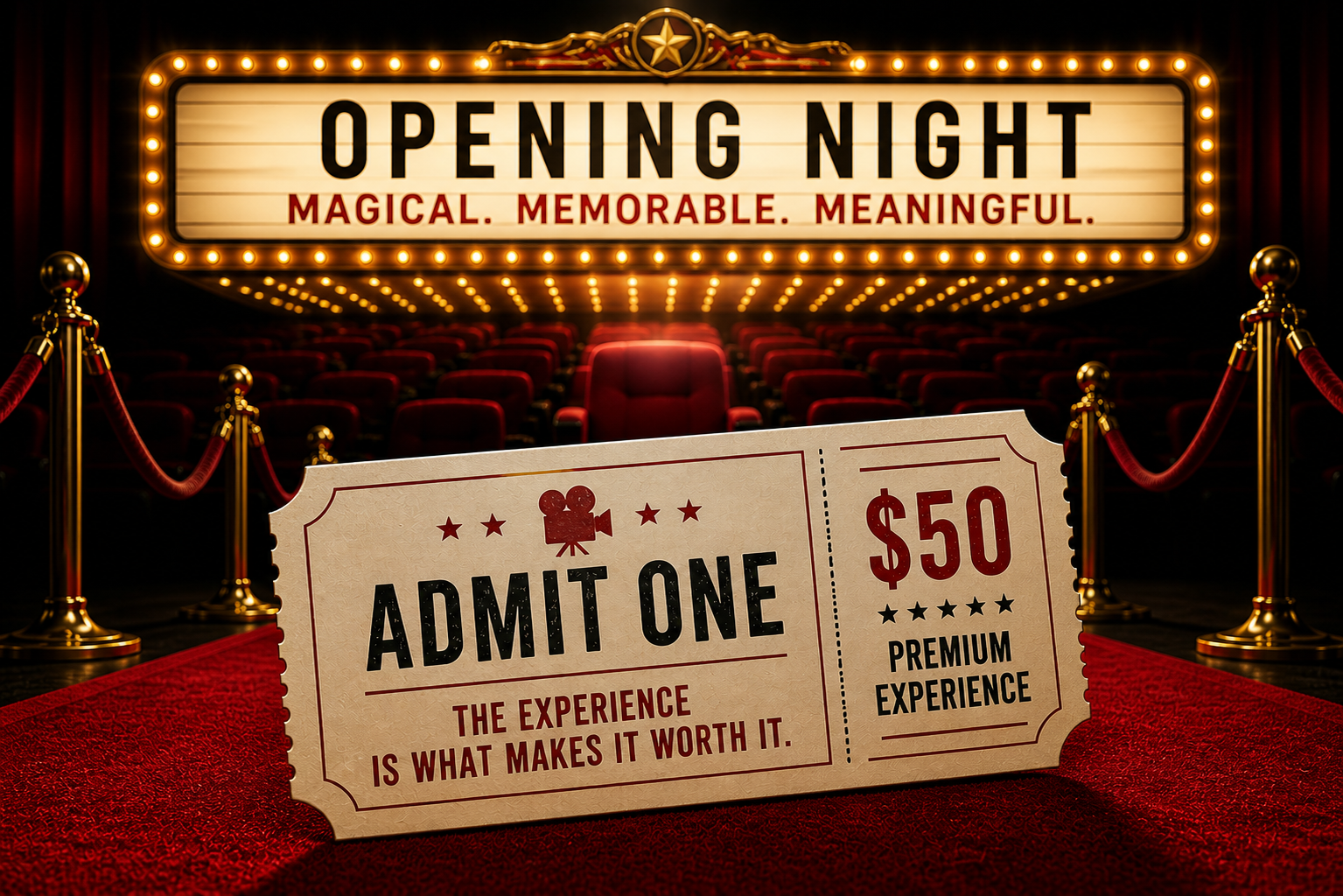
On a recent episode, Ryssdal and Wall Street Journal reporter Ben Fritz discussed Fritz’s article, “The $50 Movie Ticket Has Arrived.” The example was Regal charging $50 for advance seats to Dune: Part Three in 70mm IMAX — not just ordinary screenings, but 7 p.m. opening-weekend showtimes in a premium format, for fans who care deeply about seeing the film first and seeing it properly.

Marketplace framed the story as one about specialty movie ticket prices climbing to $50. Fritz described the pricing as part of a broader theater strategy borrowed from airlines and hotels: audience segmentation. Some people want the basic seat. Others will pay more for the version of the experience they value most.

With all affection intended, this feels like one of those moments when the marketplace was almost too obvious to see.

The valued thing was not the movie.

The movie will have many showings. It will play on other nights, in other rooms, in other formats. Eventually, it will migrate into homes, onto screens, into streaming, rental, purchase, clips, commentary, and arguments about whether the previous one was better.

The scarce and valued thing was opening weekend, in that room, in that format, with those people, at that moment.

The event.

That is not merely a transaction. It is an experience. More than that, it is a purposeful event. It has a defined time, a specific audience, shared anticipation, ritualized arrival, and a story people can tell afterward: I was there at the beginning, when the people who cared most gathered first.

And the proof is not theoretical. Fast Company reported that the Dune: Part Three 70mm IMAX experience was available in only 15 U.S. cinemas, that Warner Bros. surprise-dropped tickets months before the film’s release, and that tickets sold out in minutes.

The same report noted the predictable distortion that follows scarcity: resale listings appeared at far higher prices. Some buyers may have been fans. Some may have been speculators. Some may simply have believed the original price was too low for the demand.

That does not make the signal meaningless. It makes it more interesting.

The marketplace was not only saying, “People want this.” It was saying, “People believe this version of the experience has value beyond the ordinary ticket.”

And this is not just a Dune story, or a science-fiction fan story, or a premium-format IMAX story.

The same instinct is showing up elsewhere. Fandango offered a $50 Devil Wears Prada 2 “Runway Ready Bundle” that included one movie ticket, a Devil Wears Prada 2 popcorn handbag, and a limited-edition promotional Runway Magazine. Its product page described the offer as available for a limited time and while supplies lasted. Fandango’s own social post marked the bundle “SOLD OUT.”

Different movie. Different audience. Same underlying lesson.

The valued thing was not simply the film. It was the experience wrapped around it.

There is another ingredient here that matters: fans.

Scarcity by itself does not create value. A scarce thing no one cares about is just an unsold thing in a smaller pile. What made these offers plausible was not only the limited format, the limited bundle, or the limited timing. It was the existence of people who already cared.

Dune had fans who wanted the biggest, purest, most cinematic version of the story. The Devil Wears Prada already had fans who understood that a popcorn handbag and a promotional Runway Magazine were not merely merchandise, but part of the joke, the identity, and the pleasure of arriving inside that world.

Scarcity works best when it gives existing fans a more meaningful way to express what they already feel.

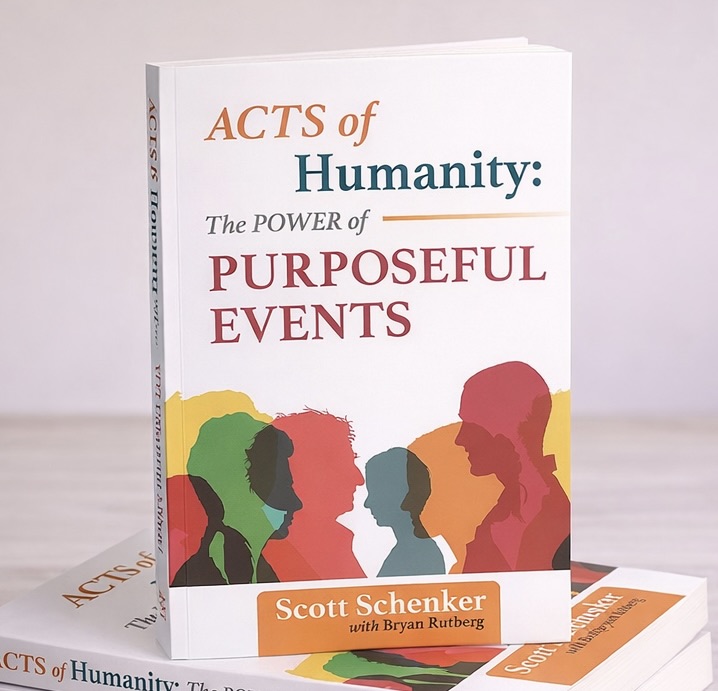
In Acts of Humanity: The Power of Purposeful Events, I write about why gatherings matter and how purposeful events create meaning, trust, memory, and action. In the essay on scarcity, I write that “some events sell scale; others sell value.” I also write that “prestige and access can be worth more than the product itself — if you deliver the experience,” and that the real lesson is to “design the value first, then let the price tell the truth about it.”

That last phrase matters.

A $50 ticket to sit in a bad seat, in a tired room, with poor sound and no sense of occasion is just an expensive mistake.

But $50 for opening weekend, in the best available format, surrounded by people who care, for a moment that will not happen the same way again? Or $50 for a movie ticket bundled with an artifact, a fashion joke, a little status object, and permission to arrive as part of the story?

Those are different offers.

That is scarcity recognized.

My sister and my father used to take the day off work to go to the first Cubs game of the season because they were Cubs fans. Not the playoffs. Not the World Series. Opening Day.

The first game of the baseball season counts exactly the same in the standings as the second game, or the seventeenth, or a damp Tuesday night in August when half the crowd is mostly there for a hot dog and a beer.

But Opening Day is different because people have agreed to make it different. It is the return of spring. It gathers the faithful — and in the case of the Cubs, the hopeful. It is a civic ritual disguised as a baseball game.

They did not just pay for tickets, parking, snacks, and whatever else came with the day. They gave it something more valuable: time. They chose that experience over other things they could have done with those hours.

That is what meaningful experiences ask of us. They ask us to invest a piece of our lives. And when people make that investment, the experience had better be worthy of it.

That is close to what I call a Brigadoon experience in the book. A purposeful event appears, becomes real for a little while, gathers people into a temporary world, and then disappears. Its impermanence is not a flaw. It is part of the magic. The temporary nature gives the moment edges. It says: pay attention, this will not last.

Kairos works the same way. It is not clock time. It is time that grows thick with meaning. Opening night can become Kairos when the right people gather at the right moment around something they care about.

From the outside, it may look like a screening.

From the inside, for the fans who wanted that experience, it may feel like being present at the start of a story.

So the better question is not, “Is $50 too much for a movie?”

The better question is, “What exactly was being offered, to whom, and why did they care?”

If the answer is only “a movie,” the price feels absurd.

If the answer is “opening weekend, in the best available format, with the most committed fans, inside a shared cultural moment that will happen only once,” then the marketplace did what markets do. It found desire meeting a real limit.

People did not pay more because the movie was scarce.

They paid more because the experience was.

And that, Kai, is not the marketplace failing.

That is the marketplace wearing couture.

#ActsOfHumanityTheBook #PurposefulEvents #Scarcity #EventDesign #ExperientialMarketing

@Marketplace by APM
@Kai Ryssdal
@Ben Fritz
@The Wall Street Journal
@Fast Company
@IMAX
@Fandango
@Regal
@American Public Media Group

Similar Posts