Essay 1.3 | Traditions & Rituals


When I joined Microsoft, one of the first surprises was how hard it was to answer a few simple questions: How much were we spending on events? Where were we showing up in person? What was the objective of each gathering? No one was hiding the information. It was simply scattered. Product groups had event…
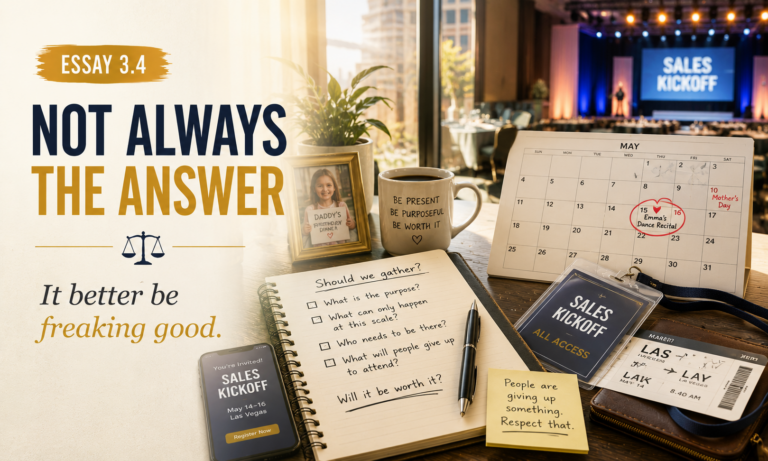
A senior leader once put the problem in beautifully human terms. If a sales kickoff lands on your daughter’s birthday or near Mother’s Day, he said, it “better be freaking good.” That line stayed with me because it cuts through the romance of gathering. Yes, events matter. Yes, shared time can do things email, dashboards,…
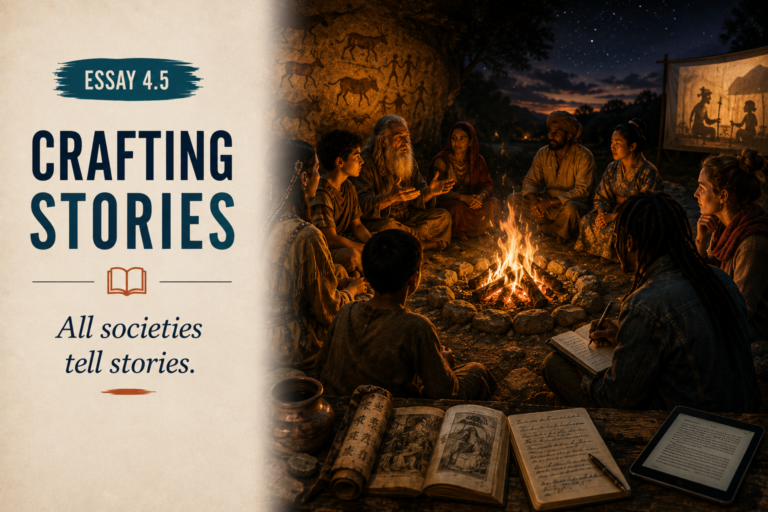
For one pharmaceutical launch, we did not begin with the product. We began with a husband, a wife, two doctors, and the shrinking of a life under chronic illness. We began with what the disease did to ordinary days: the fatigue, the fear, the appointments, the narrowing of possibility. Only then did the product enter…
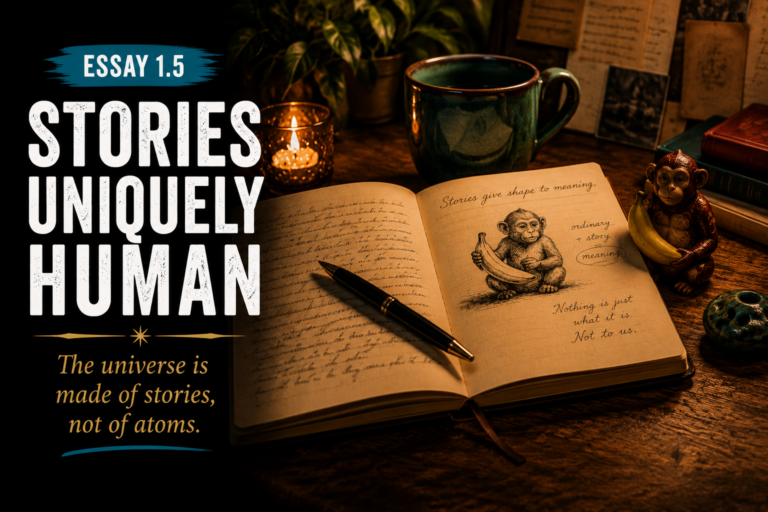
Take an ordinary object: a plastic banana, a chipped horseshoe, a small trinket you might pass at a thrift store without a second glance. On its own, it is almost worthless. Add a story, and something changes. The object has a past. It has a human connection. It becomes a little vessel of meaning. That…
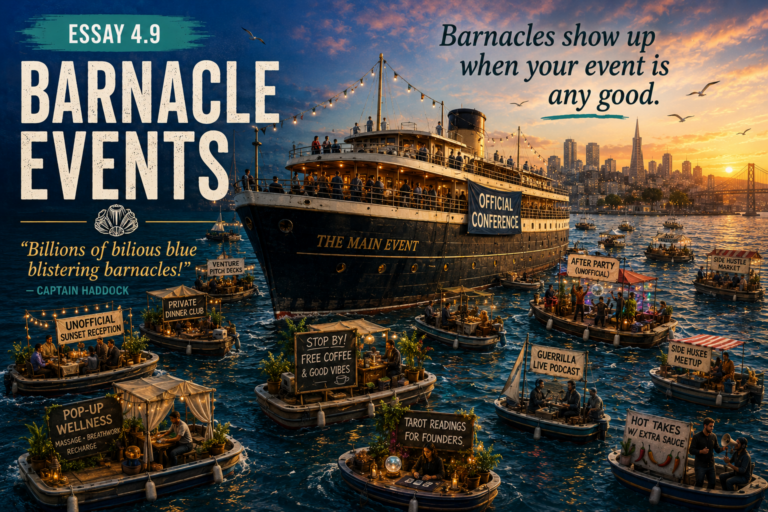
At Dell World, Brocade became known for throwing the party everyone really wanted to attend. Eventually, the party became so popular that it had to become a “whisper party,” because the official host understandably did not love watching people slip away from the sanctioned program to go somewhere more exciting. That is a barnacle event….
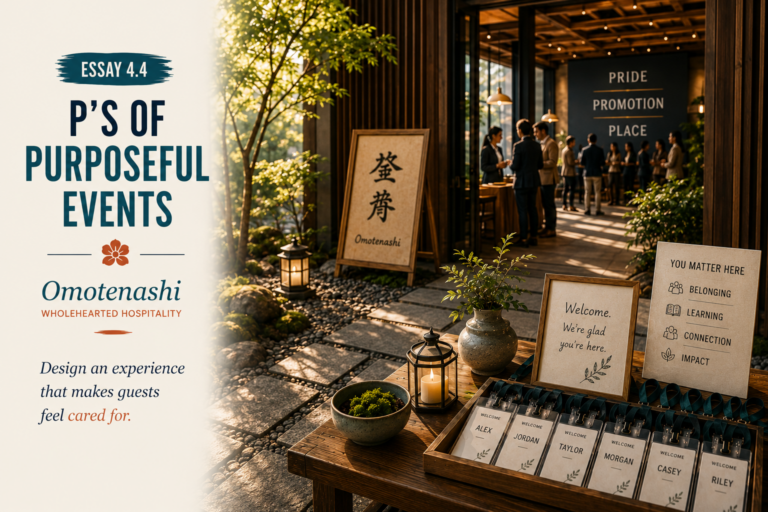
At a major event in New Orleans, I once asked taxi drivers to walk into the venue and tell me where they thought they were. Every one of them could identify the convention center. Not one of them could really tell me whose event it was or why it mattered. That bothered me because place…