Lessons Learned from a Bad Date with Barbie

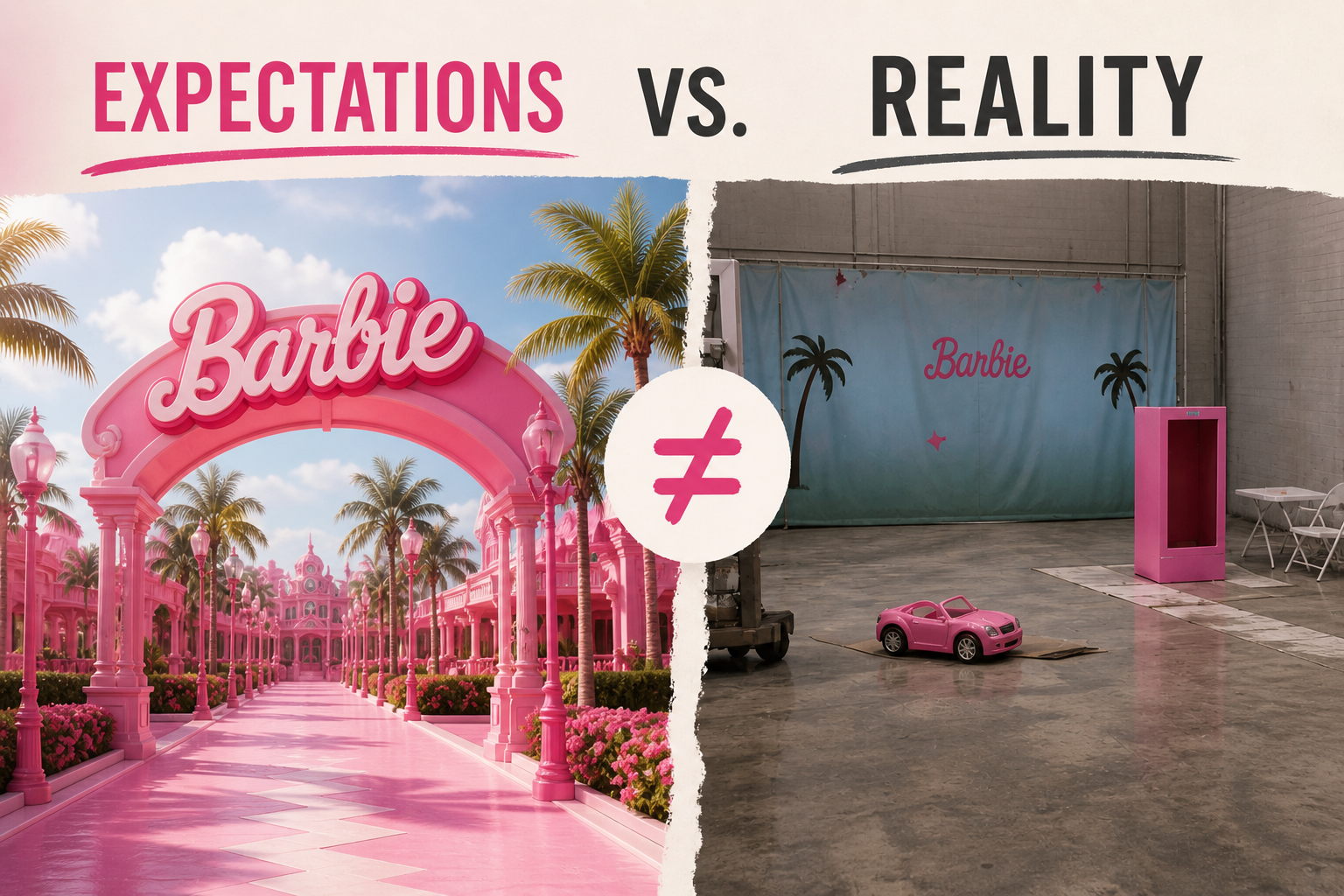
Recent coverage highlighted a Barbie-themed immersive experience in Florida where families arrived to find something very different from what had been advertised. Reporting from the BBC and others focused less on any single misstep and more on the difference between what people expected and what they encountered once they got there.
Events have a way of bringing expectation and reality into direct contact. When they align, the experience can stay with people long after it ends. When they don’t, the effect can be just as lasting—and often more visible. In this case, reactions spread quickly, and comparisons to Fyre Festival surfaced almost immediately, not because the situations were identical, but because people recognized a familiar pattern of anticipation outpacing delivery.
That’s part of what makes events different from other forms of communication. They aren’t consumed at a distance. People step into them. And once they do, the experience itself becomes the message. In situations like this, the experience doesn’t stay contained—it becomes the story, and that story extends beyond the organizers of the event (Mischief Management who licensed the Barbie name for the event) to the brand behind it, Mattel (Barbie’s creator), which was reported to have stepped in to address the situation.
There is usually a point somewhere along the path to an event where the direction becomes clear. Not perfectly, but enough to sense whether what’s being built will meet the expectations that have been set. It may show up in a planning meeting, a site visit, a budget discussion, or in the middle of a creative review when something doesn’t quite come together. It’s rarely a single moment, and it doesn’t always announce itself, but it’s there.
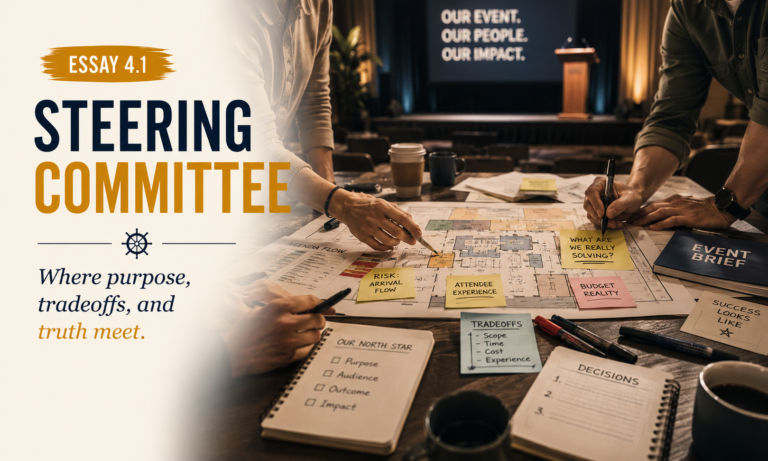
One of the ideas explored in Acts of Humanity: The Power of Purposeful Events is that not every event needs to happen. Choosing not to gather (Essay 3.4 | Not Always the Answer) can be the most responsible decision available, especially when the experience isn’t going to match the intent behind it. Another is the role of perspective—why having the right voices in the room at the right time matters. Whether through a formal steering committee (Essay 4.1 | Steering Committee) or simply someone willing to pause the process, those moments can change what ultimately reaches the audience.
Reading through the accounts of this experience, it’s hard not to wonder where that moment might have been. Not as a point of criticism, but as a point of reflection. Because that moment exists in almost every gathering, whether it’s a large-scale production or something much smaller. It’s the place where the experience of the people attending either stays at the center, or begins to drift behind the mechanics of delivering the event.
The families who attended didn’t experience the planning process or the constraints that shaped it. They experienced the outcome. And like most gatherings, what carries forward isn’t just what was built, but how it felt to be there.